Getting tasks in the right order is essential for a successful project. For new and experienced project managers alike, figuring out how tasks depend on each other in a project schedule can be a challenge. However, it’s a vital skill one must acquire.
In this guide, we’ll break down the process and provide practical steps to help new project managers identify task dependencies effectively. By the end of this article, you’ll have a clear understanding of how to navigate this crucial aspect of project planning and management, and be able to plan for smoother project execution and better outcomes!
Importance of Sequence
For project management, activity sequencing is the process of identifying and scheduling the individual activities that make up a project.1 The sequence of tasks is critical in determining task dependencies, as some tasks rely on other preceding tasks being completed first.
Getting the sequence right ensures work flows smoothly from one task to the next without delays. A wrong sequence can severely impact the project timeline, as starting tasks out of order will likely require rework once preceding work is finished.
For example, you can’t start roofing work on a house until the foundation and framing is done. Identifying these dependencies upfront through proper sequencing is crucial for keeping a project on schedule and preventing costly mistakes. Carefully planning the sequence of project tasks helps identify dependencies and leads to accurate time estimates.
Understanding Task Dependencies
To start, a task dependency is a component of project management that establishes relationships between different tasks within a project schedule. These dependencies represent how one task’s completion or progress impacts another, influencing the overall flow and timing of the project. Task dependencies fall into four main categories:2
- Finish-to-Start: The successor activity can’t start until the predecessor activity finishes. This is the most common type of dependency. For example, you must finish installing software before you can provide user training on that software.
- Start-to-Start: The successor activity can’t start until the predecessor activity starts. For example, when launching a new IT system, many implementation tasks may kick off simultaneously.
- Finish-to-Finish: The successor activity can’t finish until the predecessor activity finishes. For example, quality control processes can’t complete until production is finished, although both activities may happen concurrently.
- Start-to-Finish: The successor activity can’t finish until the predecessor activity starts. This is rarely used. For example, a manufacturer may want to finish stocking raw materials just as production begins. So the stocking can’t be completed until production starts.
Recognizing and defining these dependencies is crucial in constructing a well-structured project plan.
Tools and Techniques for Identifying Dependencies
Identifying the dependencies we’ve learned about is a key part of developing the project schedule. Project management software can assist in this by allowing you to link dependent tasks together in a pleasing visual diagram! As you build out the schedule, you can connect preceding tasks to following tasks to display the dependency. The software will then enforce the logical sequencing based on dependencies and let you see any discrepancies ahead of time.
A useful tool for doing this task is a Gantt chart, which provides a visual timeline of all project tasks in the order they need to be performed. By examining the sequencing of bars on the Gantt chart, you can easily identify dependent relationships.
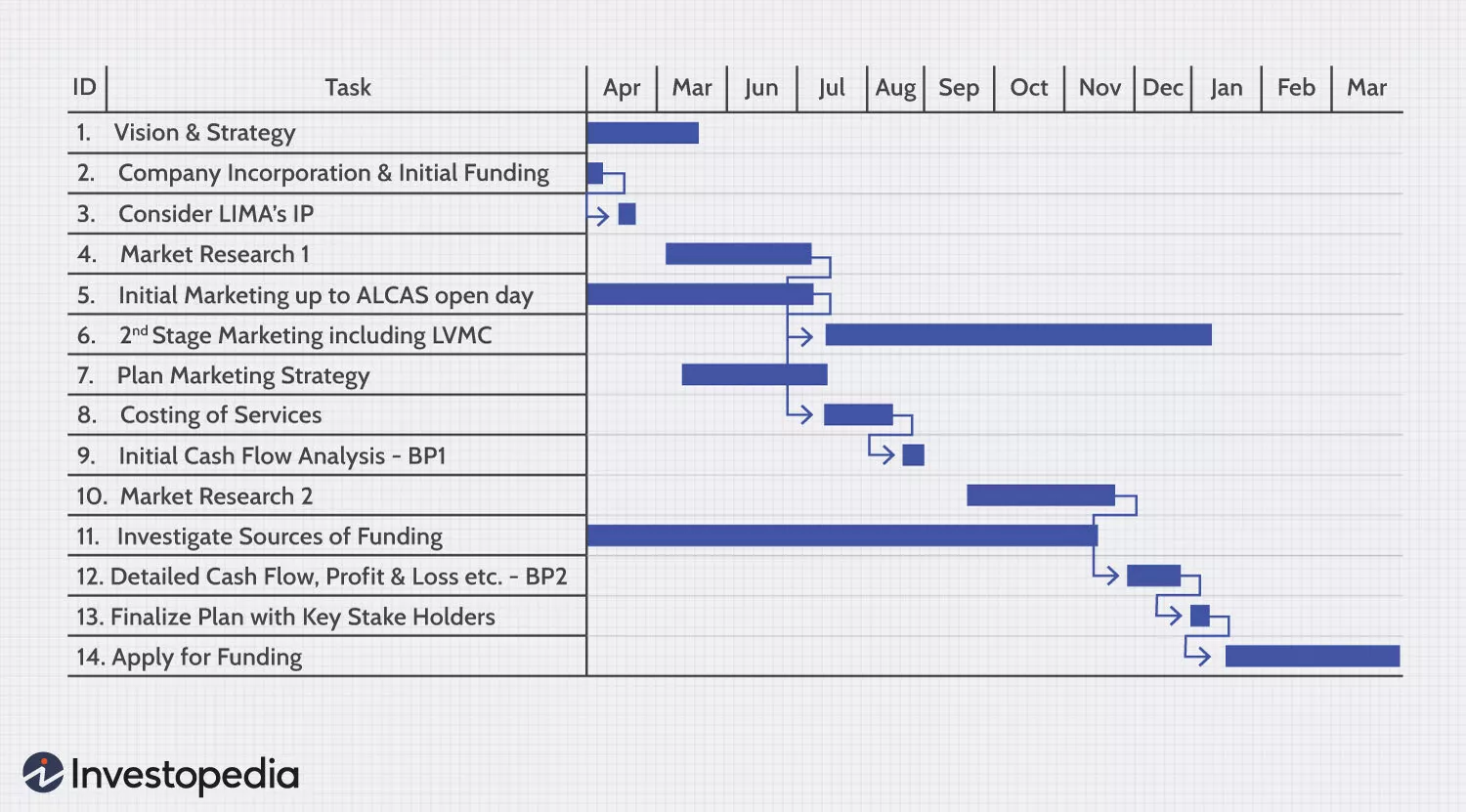 Graphic courtesy of Investopedia
Network diagrams are another visual method for mapping logical relationships, using arrows to show dependencies. Taking time upfront to thoroughly analyze the workflow and uncover dependencies will result in an accurate and painless schedule.
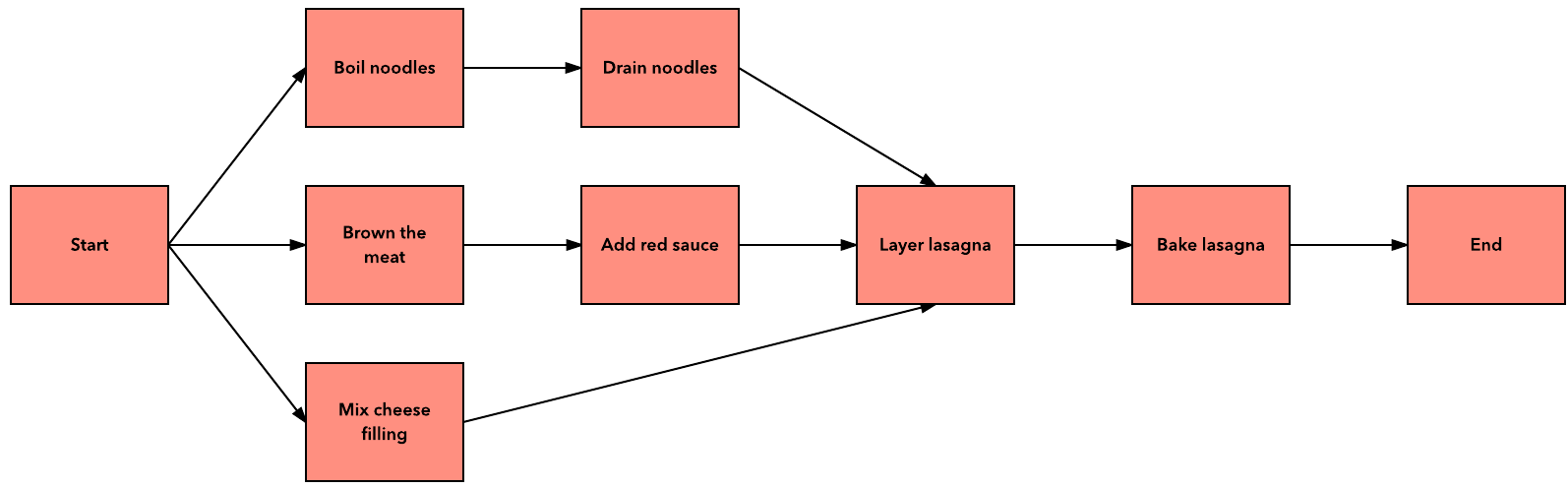 Graphic courtesy of Lucidchart
According to Kissflow, the chain of continuous activities that lead to the completion of a project is the project’s critical path. If any tasks in the critical path get delayed, the entire project will be delayed by the same time unless another critical task is completed ahead of time to make up for it.3 In summary, adopting visual mapping techniques and project management software can significantly improve dependency identification.
Identifying Dependencies
So then, how do we identify dependencies? Start with listing out all project tasks that have been defined so far. Then, map out the logical sequences for how work will flow from one task to the next. Ask questions to uncover predecessor and successor relationships: What tasks need to happen before this one can start? What tasks rely on the output of this one?
The visualization tools we’ve covered thus far makes the sequence and dependencies of a project clearer to see. Once you’ve mapped out task sequences, look for places where predecessor tasks enable successor tasks to start or finish. These are your dependencies. Using critical path analysis also reveals dependencies, as the sequence of critical path tasks dictates the overall project timeline.
Finally, confirm your dependency assumptions with your team members. Getting feedback validates your dependency analysis before formally documenting task relationships and sequences. Following these steps will enable proactive planning around task dependencies.
Common Challenges
As a new project manager, you might encounter certain challenges, such as missing dependencies, improperly sequenced tasks, and unwarranted assumptions. These become much more likely to happen when you haven’t done any sequencing activites. Skipping this essential analysis when moving straight to scheduling tasks can result in gaps in your project plan.
To avoid these mistakes, consider using Gantt charts and network diagrams, which we discussed to be valuable visualization tools. As well, don’t be afraid to research and consult with other project managers. Learning from another professional is not only practical, it’s essential to gain insight for your current project and projects in the future. Remember not to assume that you have a comprehensive understanding of all the fine details within the task flow. Maintain an open mind and rigorously verify your analysis.
By following a step-by-step approach, making use of project management tools, and actively collaborating with your teams, you’ll be better equipped to accurately identify task dependencies in your role as a new project manager.
Conclusion
In conclusion, we’ve shown that having a solid grasp of task dependencies and their management is crucial for success in project management. This article has offered practical insights into dependency types, tools for identification, and the importance of sequencing tasks correctly. New project managers can benefit from this guidance, emphasizing the need for thorough analysis, visualization tools, and collaboration with their teams to handle dependencies effectively. By mastering these skills, project managers can improve project execution and achieve better results.
References
Banner image courtesy of Actitime
(https://www.actitime.com/project-management/project-scheduling-techniques)