Introduction
The Scrum Master plays an important part in agile project management, ensuring that the project moves forward smoothly, effectively, and with a clear vision. The project roadmap is one of the Scrum Master’s most important resources. This document acts as the project’s map, laying out a clear course, outlining checkpoints, and emphasizing dependencies. In this story, we’ll look at the importance of the project roadmap, how it’s made and updated, and how it contributes to a project’s successful completion.
The Significance of a Project Roadmap
A project roadmap is not just a document; it guides the course of a project from initiation to completion. It is a crucial tool that serves various critical purposes:
Vision: The roadmap creates a distinct and widespread knowledge of the project’s aims. It provides essential responses to issues like “What are we trying to accomplish?” and “Why are we doing this project?”
Scope: Project stakeholders are better able to comprehend the project’s boundaries and constraints by understanding its scope, which is detailed.
Progress: Progress is being made thanks to the plan, which divides the project into realistic parts and provides important dates and milestones. Teams may utilize this to successfully set short-term and long-term goals and measure their progress.
Map: The roadmap depicts the visual connections between various activities and teams. By helping to identify issues and potential delays early on this enables proactive problem-solving.
Communication: To ensure that everyone involved is on the same page, the roadmap acts as a form of communication. It strengthens the connection between team members and stakeholders, promotes cooperation, and manages expectations.
Managing Risk: By highlighting possible setbacks and obstacles, the roadmap aids in managing and planning risk reduction. This approach can stop unanticipated problems from happening on the project.
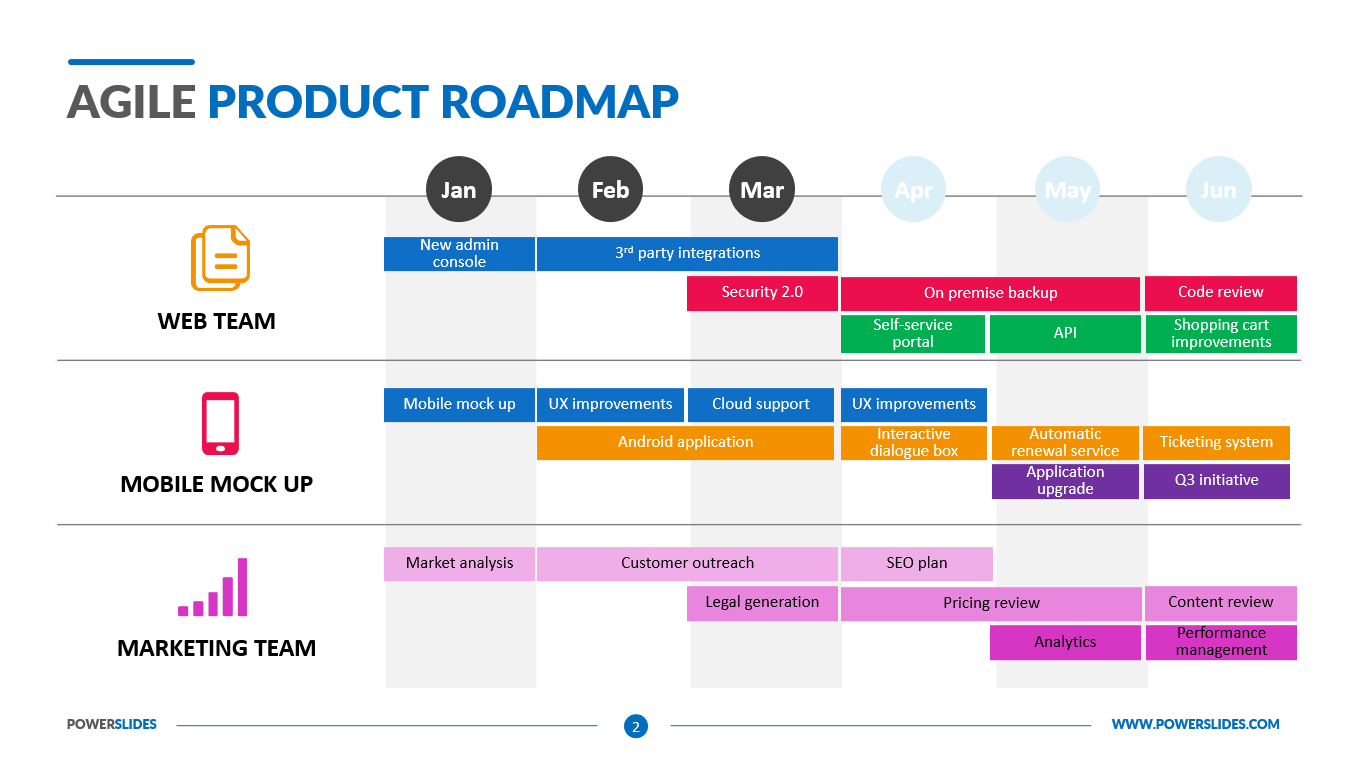 Graphic courtesy of PowerSlides
Roadmap development for the project:
The process of developing a project roadmap is ongoing and changes as the project advances. The following points outline the procedures for developing a successful project roadmap and creating a productive work environment:
Project Initiation:
- Understand the project’s objectives, goals, and scope.
- Identify key stakeholders and their expectations.
- Collaborate with the product owner, business analysts, and development teams to gather input on project requirements.
Define Milestones:
- Work with the product owner to define high-level milestones that align with the project’s objectives.
- Milestones should be specific, measurable, achievable, relevant, and time-bound (SMART).
Identify Dependencies:
- Collaborate with teams to identify dependencies between tasks, teams, and external factors.
- Use visual tools like Lucidchart or Draw.io to map these dependencies.
Create a Visual Representation:
- Choose a suitable format for your roadmap, such as a timeline, Lucidchart, or Kanban board.
- Input the identified milestones, dependencies, and any relevant details.
Review and Refine:
- Regularly review and refine the roadmap in collaboration with the project team and stakeholders.
- Ensure that it reflects the current project status and aligns with changing priorities.
Communicate and Share:
- Share the roadmap with all stakeholders, including the development team, product owner, business analysts, and upper management.
- Use it as a point of reference for project-related discussions and decision-making.
Maintaining the Project Roadmap:
- Maintaining a project roadmap is an ongoing process that requires vigilance and adaptability.
Here are some important notes when maintaining the roadmap effectively:
Continuous Updates:
- Regularly update the roadmap to reflect changes in project scope, priorities, and timelines.
- Ensure that it remains a living document that accurately represents the project’s status.
Communication:
- Use the roadmap as a communication tool to keep all stakeholders informed about project progress.
- Address questions and concerns promptly to maintain trust and transparency.
Conflict Resolution:
- When conflicts or roadblocks arise, use the roadmap as a reference to facilitate discussions and find solutions.
- Collaborate with the relevant teams to resolve dependencies and handle risks.
Risk Management:
- Keep an eye on potential risks and issues identified on the roadmap.
- Develop mitigation plans and take proactive measures to address them.
Alignment with Agile Principles:
- Ensure that the roadmap aligns with agile principles, such as responding to change over following a plan.
- Be open to adjusting the roadmap when necessary to accommodate changing requirements and priorities.
Feedback Loop:
- Encourage feedback from the project team and stakeholders on the effectiveness of the roadmap.
- Use this feedback to continuously improve the roadmap’s format and content.
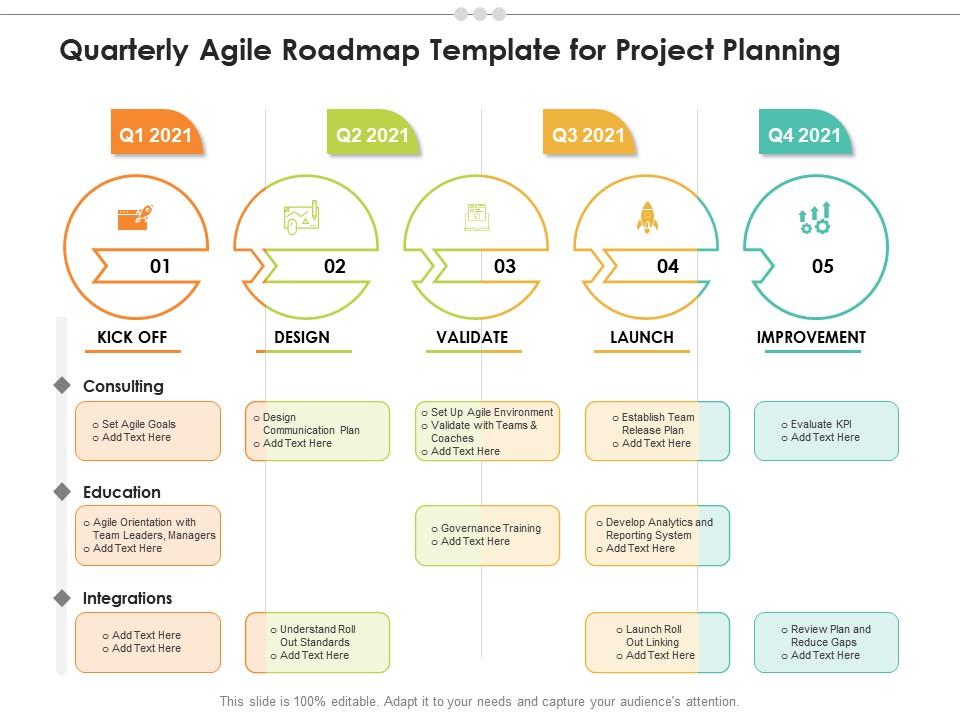 Graphic courtesy of Slide Team
How the Project Roadmap Leads to a Successful Project:
A well-maintained project roadmap is not just a document that sits around without being used. It actively contributes to the success of the project in several ways:
Alignment and Focus: The roadmap keeps all stakeholders aligned with the project’s objectives, preventing divergence of efforts and ensuring everyone is working toward a common goal.
Resource Allocation: It helps in efficient resource allocation by providing a clear view of task dependencies and resource requirements.
Progress Tracking: Teams can track their progress against milestones, allowing for early identification of delays and quick course correction.
Risk Mitigation: By identifying dependencies and potential risks, the roadmap enables proactive risk mitigation strategies, reducing the likelihood of project setbacks.
Stakeholder Confidence: Regular updates and communication through the roadmap build confidence among stakeholders, demonstrating that the project is under control and progressing as planned.
Adaptability: The roadmap’s flexibility allows for adaptation to changing circumstances and priorities, ensuring that the project remains responsive to evolving needs.
Decision Support: When tough decisions need to be made, the roadmap provides a data-driven basis for those decisions, helping stakeholders understand the implications of different choices.
Conclusion
In the world of agile project management, the role of a Scrum Master is multifaceted, involving facilitation, coaching, and leadership. Central to this role is the creation and maintenance of a project roadmap, which acts as a vital guide throughout the course of the project. It provides clarity, aligns stakeholders, manages dependencies, and helps with successful project execution.
Creating and maintaining a project roadmap is not a static process but a dynamic one that evolves with the project. It requires collaboration, communication, and adaptability. It is not only a document but a tool that empowers Scrum Masters to steer their teams toward project success, even when met with uncertainty and change.
References:
- “Agile Roadmap” [Free_PowerPoint_Templates] (https://www.free-power-point-templates.com/articles/free-editable-agile-roadmap-powerpoint-template/)
- “What Does the Agile Roadmapping Process Look Like in Practice?” [ProductPlan] (https://www.productplan.com/learn/agile-roadmapping-process/)
- “What Is SMART in Project Management?” [wrike] (https://www.wrike.com/project-management-guide/faq/what-is-smart-in-project-management/)