Agile vs. Waterfall Methodologies
The success of a project depends on choosing the appropriate approach in the field of project management. The two well-known methods are Waterfall and Agile. Making a decision between them might be challenging because each has its own set of guiding ideas and practices. I’ll explain the differences, advantages, and disadvantages of the Agile and Waterfall techniques in this blog article, as well as the situations in which each one excels.
Agile Methodology
- Flexibility and Adaptability Agile is often celebrated for its flexibility and adaptability. It embraces change and thrives in environments where requirements are expected to evolve. Agile divides the project into small increments, known as iterations or sprints, typically lasting 2-4 weeks. Each sprint focuses on a specific set of features or deliverables, allowing teams to respond quickly to changing priorities or stakeholder feedback.
- Customer-Centered Approach Agile places a strong emphasis on customer collaboration and feedback. Throughout the project, stakeholders are involved in the development process, offering their insights and preferences. This iterative feedback loop ensures that the final product aligns closely with customer expectations, resulting in higher satisfaction rates.
- Incremental Progress One of the core principles of Agile is the delivery of a potentially shippable product incrementally. This means that even in the early stages of development, there are tangible results that can be demonstrated to stakeholders. This not only builds trust but also helps in identifying potential issues sooner rather than later.
- Transparency Agile projects are characterized by their transparency. Team members maintain a clear view of project progress through tools like burndown charts and daily stand-up meetings. This transparency promotes accountability and allows for early detection and resolution of roadblocks.
- Empowered Teams Agile teams are often self-organizing and cross-functional. Team members have a say in decision-making processes, fostering a sense of ownership and empowerment. This can lead to increased motivation and productivity.
Waterfall Methodology
- Sequential Approach Waterfall, in contrast, is a linear and sequential methodology. It follows a strict order of phases, typically including requirements gathering, design, implementation, testing, deployment, and maintenance. Each phase must be completed before moving on to the next, making it less flexible in accommodating changes.
- Comprehensive Planning Waterfall places great emphasis on comprehensive planning upfront. Requirements and design specifications are meticulously documented before any coding begins. This detailed planning can reduce ambiguity but may also lead to a slower project kickoff.
- Limited Stakeholder Involvement Stakeholder involvement is more limited in Waterfall compared to Agile. Feedback from stakeholders is typically gathered in the early stages of the project, and major changes are often costly and time-consuming to implement once the project is underway.
- Reduced Flexibility Waterfall is less adaptable to changing requirements. Any significant modifications or additions to the project scope can disrupt the entire timeline and may require substantial rework.
- Well-Defined Milestones In the Waterfall methodology, well-defined milestones mark the completion of each phase. These milestones provide clear checkpoints for progress assessment and help ensure that the project stays on track.
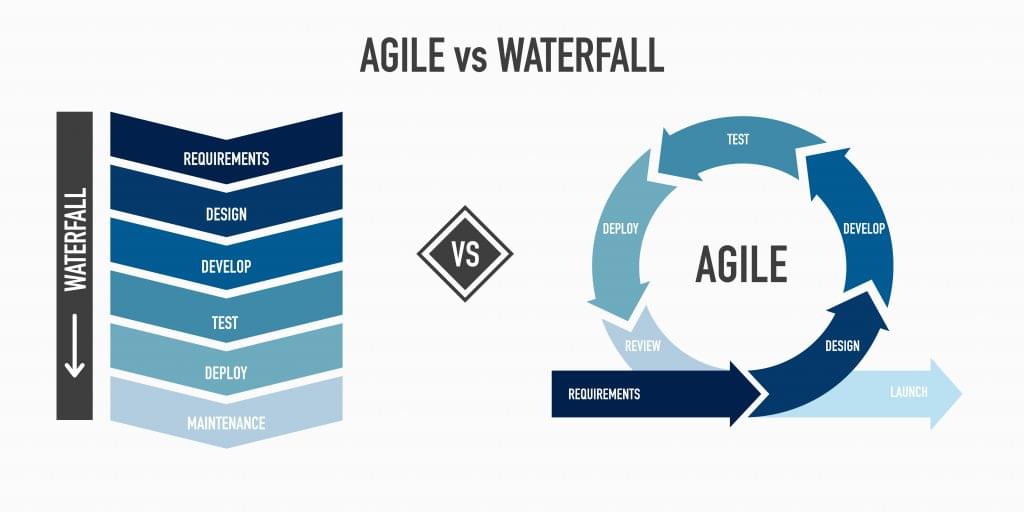 Graphic courtesy of TechnologyAdvice
Key Differences Between Agile and Waterfall
- Approach to Change: Agile welcomes change and accommodates it throughout the project. Waterfall resists change after the planning phase.
- Customer Engagement: Agile involves customers and stakeholders continuously. Waterfall engages customers primarily in the initial stages.
- Phases and Sequence: Agile divides the project into iterations or sprints with overlapping phases. Waterfall follows a strict sequential order of phases.
- Documentation: Agile values working software over comprehensive documentation. Waterfall prioritizes comprehensive documentation.
- Project Control: Agile relies on frequent inspections and adaptations. Waterfall emphasizes upfront planning and control.
Advantages of Agile
Flexibility: Agile can quickly adapt to changing requirements and priorities. Customer Satisfaction: Continuous customer involvement leads to products that better meet customer needs. Early Deliveries: Incremental releases allow for early delivery of valuable features. Transparency: Agile offers transparency through regular progress updates and meetings. Empowered Teams: Self-organizing teams often result in higher morale and innovation.
Disadvantages of Agile
Lack of Predictability: The flexibility of Agile can sometimes lead to unpredictable project outcomes. Resource Intensive: Frequent meetings and communication can be resource-intensive. Inadequate Documentation: Agile may lack comprehensive documentation, which can pose challenges for maintenance and knowledge transfer. Customer Overload: Continuous customer involvement can be overwhelming for some stakeholders. Not Suitable for All Projects: Agile may not be suitable for projects with rigid regulatory requirements or fixed deliverables.
Advantages of Waterfall
Clear Milestones: Well-defined phases provide clear project milestones. Comprehensive Planning: Extensive upfront planning can reduce ambiguity. Stable Requirements: Requirements are typically locked down at the beginning, reducing scope creep. Documentation: Thorough documentation supports maintenance and future enhancements. Resource Allocation: Resources can be allocated more predictably.
Disadvantages of Waterfall
Limited Flexibility: Inflexibility in accommodating changes can lead to project failure. Customer Dissatisfaction: Limited customer involvement can result in misaligned deliverables. Late Discoveries: Issues may only surface late in the project, making them costly to address. Long Delivery Times: Longer development cycles can delay product delivery to market. High Risk: The risk of project failure due to unexpected issues is higher.
Choosing the Right Methodology
The choice between Agile and Waterfall should not be made arbitrarily. Instead, consider the following factors: Project Type: Agile is well-suited for projects with evolving requirements, while Waterfall may be better for well-defined, stable projects. Customer Involvement: Assess the level of customer involvement required. Agile encourages continuous feedback, while Waterfall involves customers primarily at the beginning. Project Size and Complexity: Smaller, less complex projects may benefit from Agile’s flexibility, while large, complex projects may require the structure of Waterfall. Regulatory Requirements: Projects with strict regulatory requirements may lean towards Waterfall, which emphasizes documentation and control. Team Experience: Consider the expertise of your team. Agile may require a shift in mindset and practices that your team needs time to adapt to. Risk Tolerance: Assess your organization’s risk tolerance. Agile may be riskier due to its adaptability, while Waterfall offers more predictability.
Hybrid Approaches
In some cases, a hybrid approach that combines elements of both Agile and Waterfall can be the best solution. This allows for flexibility in certain areas while maintaining structure and predictability in others.
Conclusion
In the Agile vs. Waterfall debate, there is no one right answer. Each methodology has its strengths and weaknesses, making it essential to align your choice with the specific needs of your project and organization. Flexibility, customer engagement, and the nature of your project should guide your decision-making process. Ultimately, the success of your project depends not only on the methodology you choose but also on how well you execute it and adapt it to your unique circumstances. By understanding the nuances of Agile and Waterfall, you can make an informed choice that sets your project on the path to success.
Sources:
https://www.forecast.app/blog/difference-between-agile-waterfall#:~:text=Agile%20and%20waterfall%20are%20two,in%20a%20more%20linear%20process. https://www.forbes.com/advisor/business/agile-vs-waterfall-methodology/ https://www.atlassian.com/agile/project-management/project-management-intro